

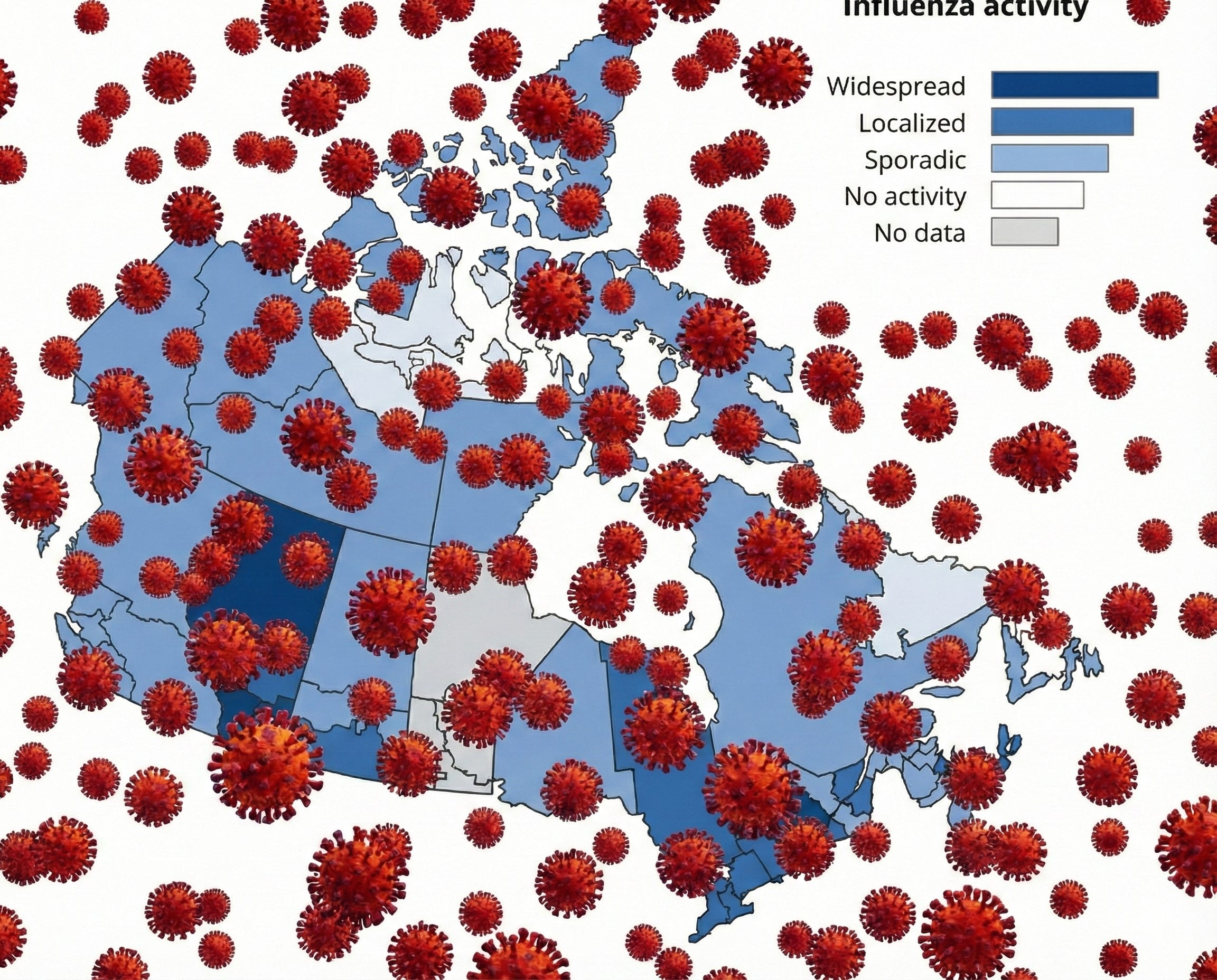
I was on CBC’s The Current yesterday to discuss how the current flu season is shaping up so far. Across many parts of Canada, flu is surging in children. Three kids have died in Ottawa. Pediatric hospitals are filling up in Montréal. There is an emergent strain of H3N2 that is rapidly becoming dominant. It diverges enough from the H3N2 vaccine strain that antibodies elicited by the vaccine don’t neutralize the circulating H3N2 viruses as well as those that are better matched.
This flu season is off to a pretty rough start across the entire northern hemisphere and it’s only going to get worse as people gather for the holidays. Other winter respiratory viruses will be in the mix too, like respiratory syncytial virus (RSV) and the vast grab bag of viruses that cause common colds. The burden on the health care system will continue to increase.
To make things worse, this is all going on in the US, as well. Not only is that bad, but the current degraded state of American public health makes it worse, for people in Canada as well as people in the US. To understand why, it’s important to understand both the scientific context about this season’s circulating flu strains, as well as how vaccination is being impacted by the current Make America Healthy Again (MAHA) regime happening south of the border.
Last year was the worst flu season since pre-COVID times in terms of hospitalizations and mortality. In the US, nearly 300 children died. Scientists at the Centers for Disease Control and Prevention (CDC) from the Influenza Division of the National Center for Immunization and Respiratory Diseases (NCIRD) published a study in the Morbidity and Mortality Weekly Report that showed that most of these kids had underlying medical conditions. The vast majority were unvaccinated.
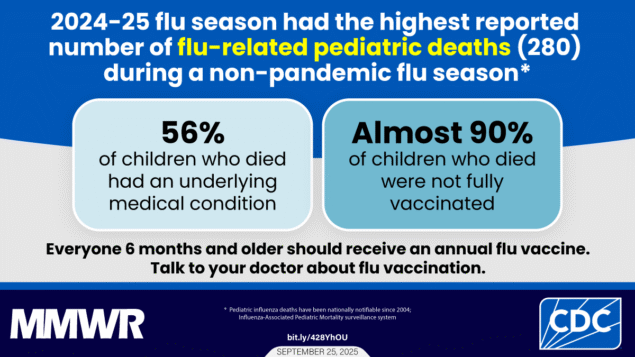
This is a recurring theme: the cases of severe disease, hospitalizations, and death occur disproportionately in kids who have not been vaccinated. And this year, vaccine uptake in both Canada and the US has been low, owing in part to the pervasive vaccine disinformation that flourishes in both countries. The fact that the US Secretary of Health and Human Services (HHS) Robert F. Kennedy, Jr. is a rabid anti-vaxxer is also germane to this discussion.
Is this a really bad flu season?
Looking at the data, things aren’t encouraging so far. I went to FluWatch+ to check out the situation in Canada. Test positivity is much higher now than it was at this time last year. This means that around 20% of tests for flu that are performed on people with influenza-like illness come back positive for influenza A virus. The fact that it’s still going up means that there is a lot of flu transmission occurring. It seems to be happening largely in kids, spreading through schools.
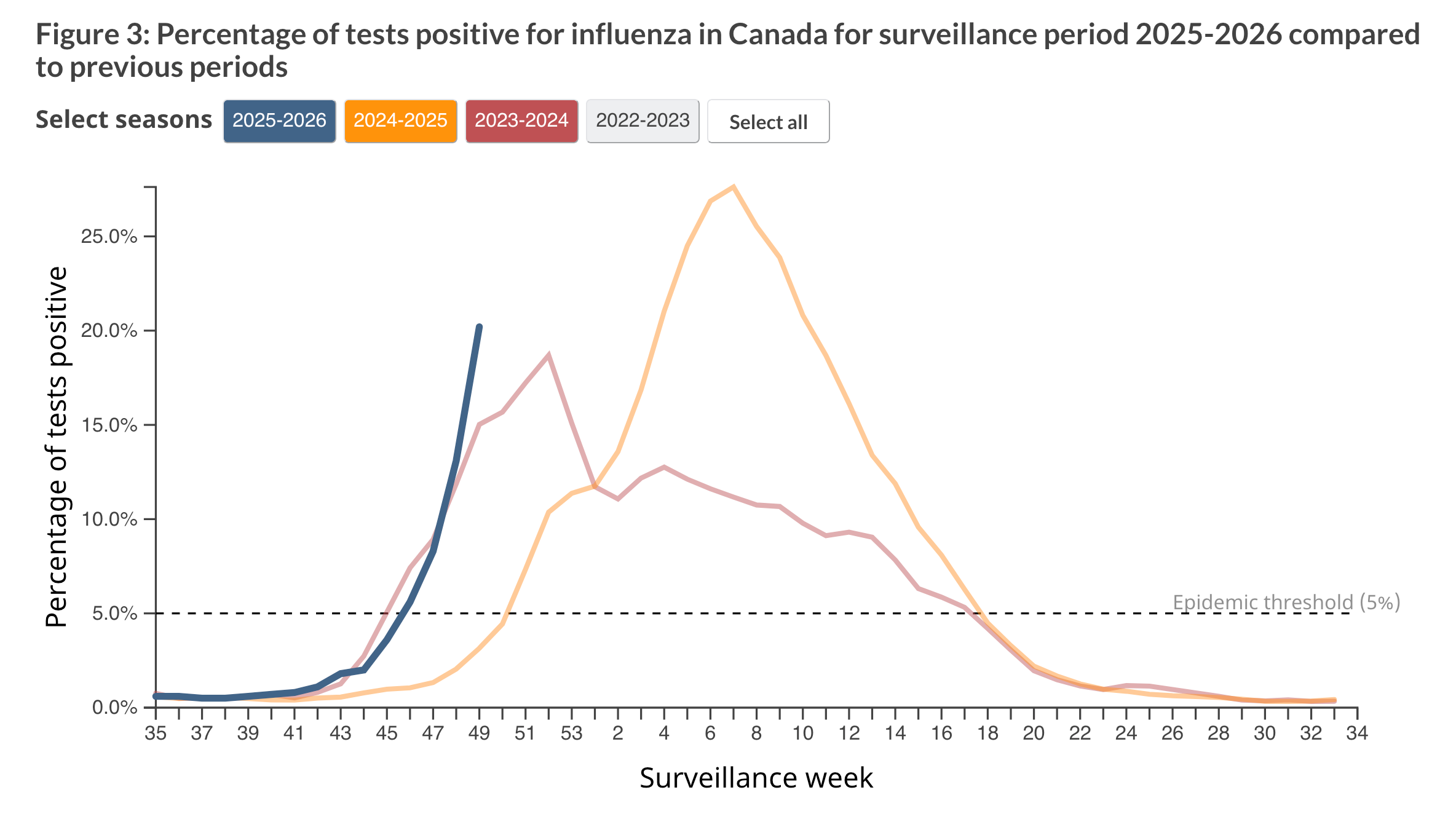
We can’t say if the entire flu season is going to be really bad, but this is not an encouraging start. Widespread transmission in kids right around the holidays is not ideal, because it leads to transmission in other populations, especially older people. Older people, like younger children, are at a higher risk of severe disease from flu. The holidays are a time when everyone of all ages comes together indoors and there is potential for a lot of spread.
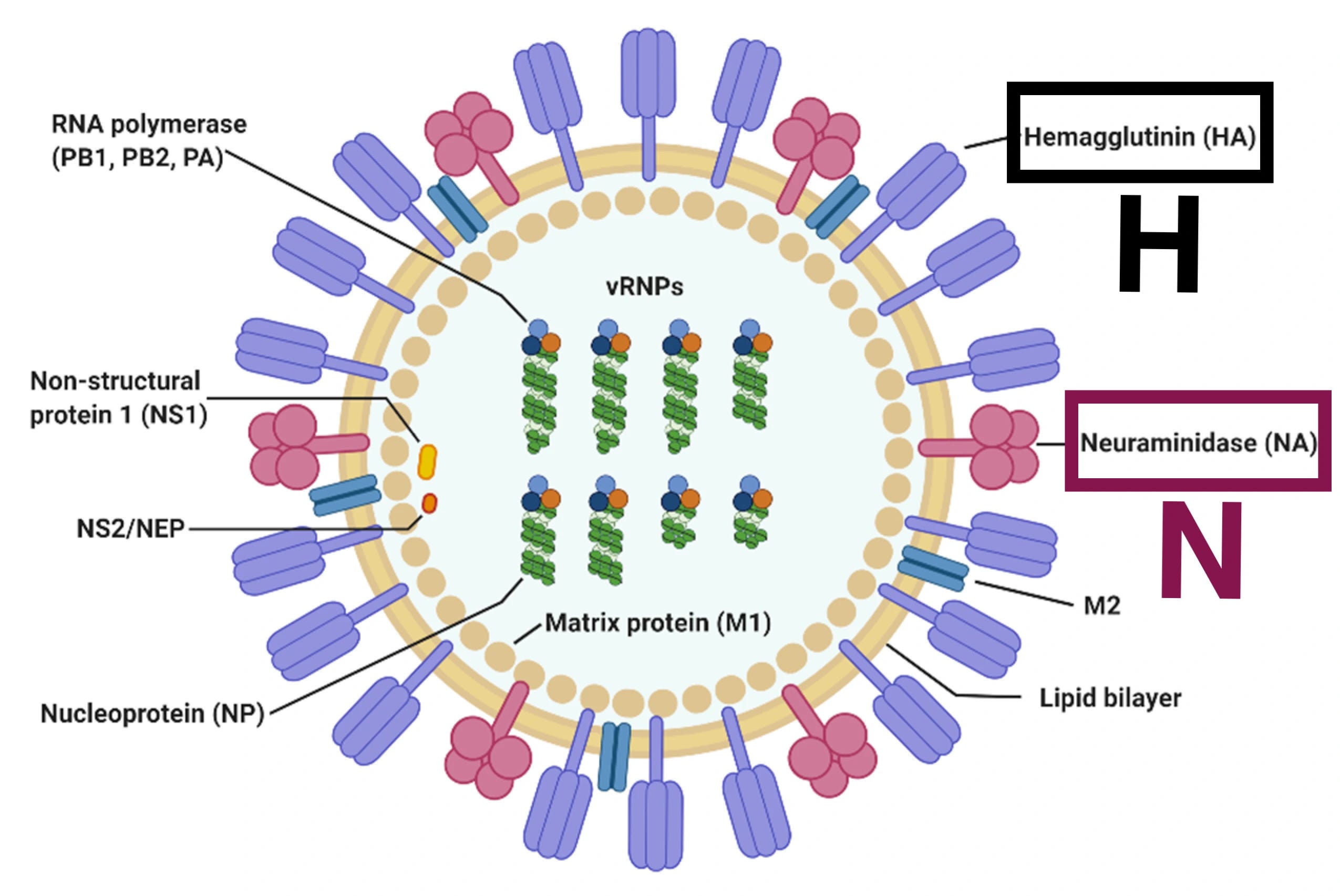
It also matters which subtype is causing the infection. There are two subtypes of influenza A virus that circulate in humans right now: H1N1 and H3N2. Subtypes are determined by two proteins on the surface of the virion (virus particle): hemagglutinin (HA or H) and neuraminidase (NA or N). The HxNx numbering refers to subgroups of the H and N proteins that are antigenically similar—they are groups of viruses that are bound by the same antibodies. If you are infected with H1N1, you will develop antibodies to H1 and N1, but they will not cross-react with H3N2, because H3 and N2 are immunologically distinct. When antibodies bind these proteins, they can neutralize the virus (render it non-infectious).
Different subtypes have different properties, including their pathogenicity. H3N2 is thought to be more pathogenic (causing more severe disease). The H1N1 subtypes currently circulating are all derived from the 2009 pandemic strain, so many people have recent immunity. Predicting influenza disease severity is incredibly complicated, since people acquire exposure to multiple subtypes over the course of their lifetime. Age, sex, genetics, and health also determine severity. Your immune responses might be biased for life based on the first subtype you are exposed to, a concept called “imprinting” or “original antigenic sin.” For me, that’s probably H3N2 (I was hospitalized for flu when I was a year old and I looked it up. Although 1918-derived H1N1 had recently reemerged in 1977, H3N2—probably something that was antigenically between the two reference strains A/Bangkok/1/79 and A/Texas/1/77—dominated in the winter of 1979-1980).
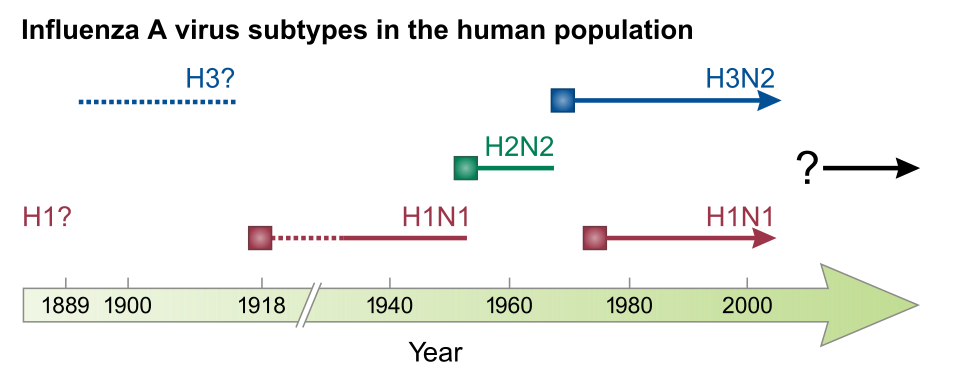
Original sin might have actually worked out for me for once this flu season, because this year, H3N2 is the dominant subtype causing all these positive tests. If I really am H3N2-imprinted, vaccination will preferentially boost my H3N2 memory responses. And I need that because I’m pretty sure my husband has the flu from a party we went to last weekend. We were both vaccinated in October. He is about 20 years older than me and from the Soviet Union, so he was likely imprinted with H2N2, which was the dominant subtype circulating in the early 1960s when he was born. He has been miserable with influenza-like illness the past couple of days, while I have had symptoms so mild that I can’t tell if it’s just allergies and my asthma acting up (I’m staying home just in case). I can’t prove my imprinting hypothesis and I’m not even sure he has flu (although his symptoms seem like flu). But if it is, our vaccines are the reason why I made him soup and tea yesterday and served it to him in bed instead of having to drive him to the hospital during a blizzard. He feels like shit, but it’s not life-threatening, we can manage his symptoms with over-the-counter medication, and it doesn’t require medical care.
Also, if it is flu, then presumably it’s the new vaccine-evasive emergent H3N2. H3N2 is very clearly dominant over H1N1 and influenza B (which doesn’t usually kick up until later in the season). Not every virus gets subtyped, but of those that do, they are mostly H3N2.
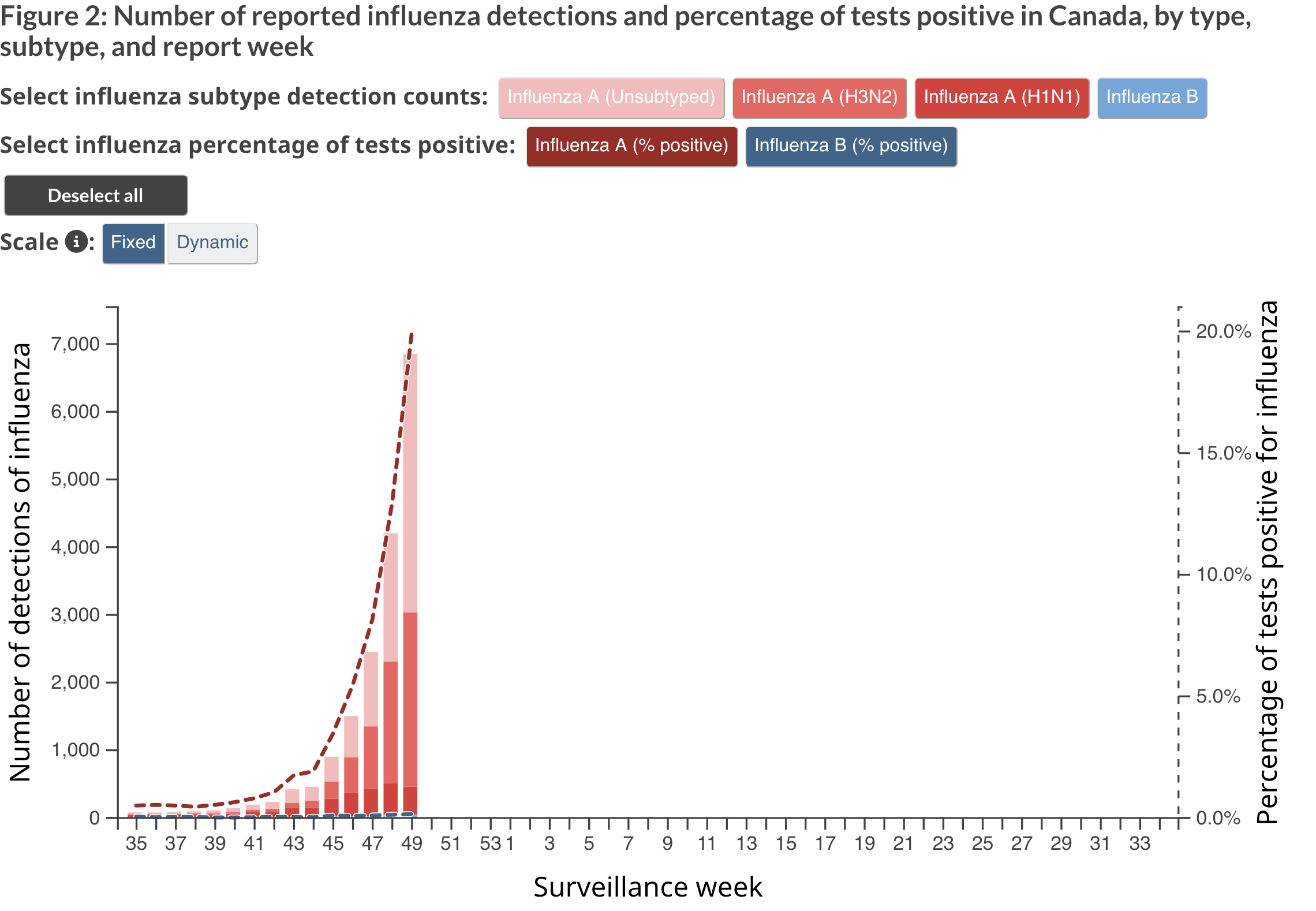
One reason for its dominance may be that H3N2 has acquired mutations in H3 HA that changed it antigenically (as far as your immune system is concerned). Flu is an RNA virus and it can change rapidly, since it acquires mutations every time it replicates. When there is a lot of spread, there are a lot of opportunities to acquire mutations that can make the virus a mismatch for antibodies targeting the vaccine strain.
To test this, my colleagues at the Public Health Agency of Canada’s National Microbiology Lab (NML) performed a test called a hemagglutination inhibition (HAI) assay. It measures how many antibodies bind HA in serum from vaccinated people (or ferrets or mice). As you can see in table 1 below, there is severely reduced reactivity—meaning less antibody binding—occurring for the H3N2 component of this year’s flu shot.
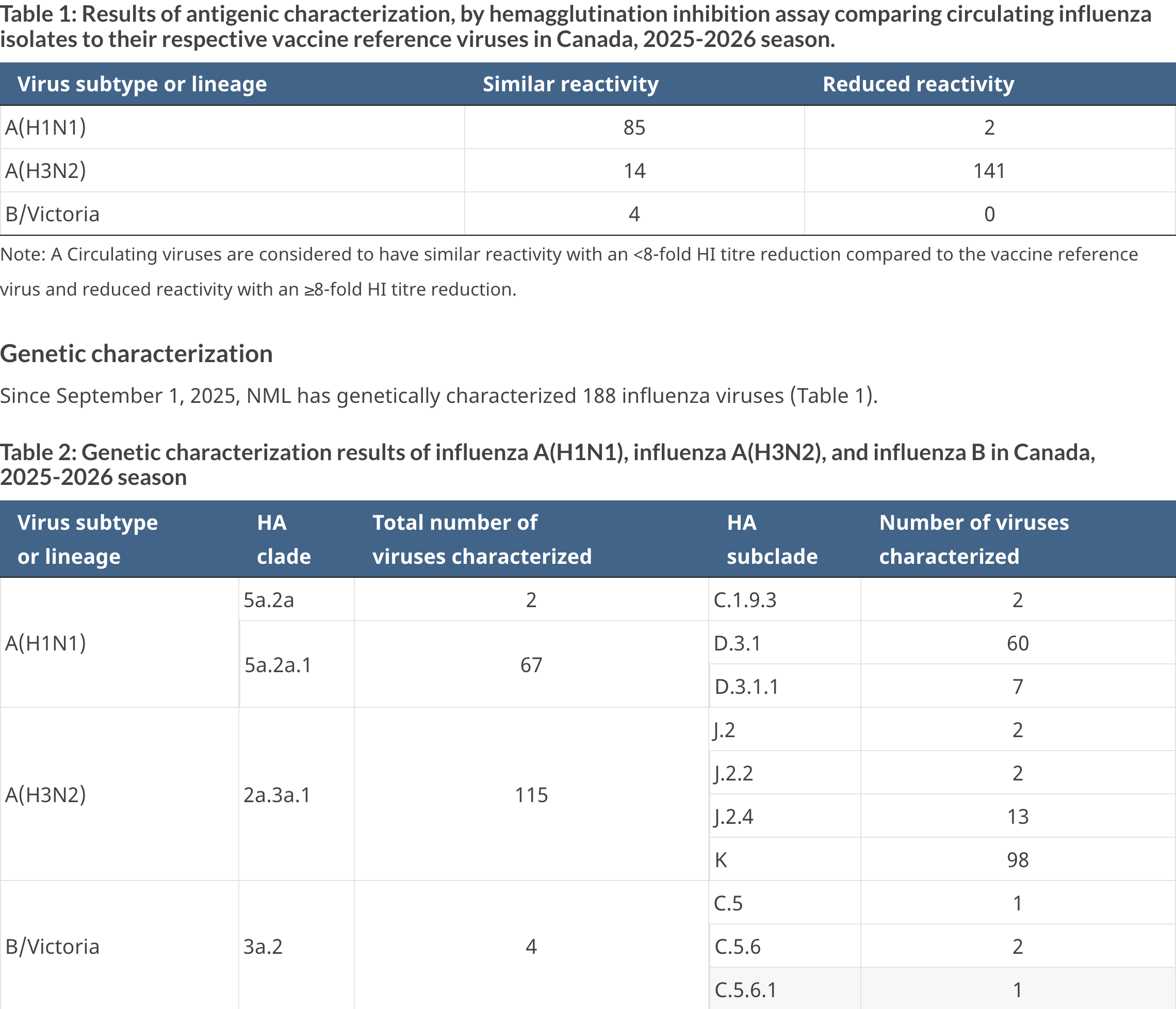
That is because table 2 shows that the majority of H3N2 viruses that NML has sequenced are HA subclade K, which contains the aforementioned immune evading mutations. It’s hard to say what will happen in the population based on results in a HAI assay, which are in vitro tests in a lab. You can’t make too many conclusions about what this means for flu season overall, but you can probably assume that the vaccine will be less protective against infection. However, there is one prediction I feel confident making: if people don’t get vaccinated, it will be a bad flu season. The more that don’t get vaccinated, the worse it will be.
So does the vaccine still work?
A lot of people hear that antibodies raised by the vaccine don’t bind as well and think that the vaccine doesn’t work. This is not true—the vaccine does still work, despite the mismatch. Antibodies are not the totality of your immune response. T cell responses (and there are many different kinds) significantly reduce disease severity, and they are not necessarily constrained by subtype. They can respond to many different flu viruses, because they can respond to more broadly conserved (common to many flu viruses) antigens.
It is not uncommon for a vaccine strain to be mismatched from those that actually circulate during flu season. Flu strains are selected for the northern hemisphere in February and for the southern hemisphere in August. That gives manufacturers enough time to make flu vaccines at national scale. It also gives circulating viruses time and opportunity to evolve, sometimes resulting in a mismatch between the vaccine and the dominant virus(es). When there is a big difference, there are also often more cases because antibody neutralization is reduced. But even if there are more cases, the same trend occurs repeatedly whether there is a mismatch or not: the majority of deaths occur in people who either have contributing medical conditions and/or are unvaccinated.
According to this week’s data, hospitalizations have skyrocketed in two groups in particular: older people over 65 years old and very young children, aged 0 to 4 years. Both of these groups are very vulnerable to severe influenza. Babies don’t have prior immune experience with influenza viruses, so they are especially susceptible. Immune responses can wane with age, so older people can also be more susceptible to getting infected and less likely to clear infections. Both groups benefit significantly from vaccination. And many of the people who get sick enough to require hospitalization are likely to be unvaccinated.
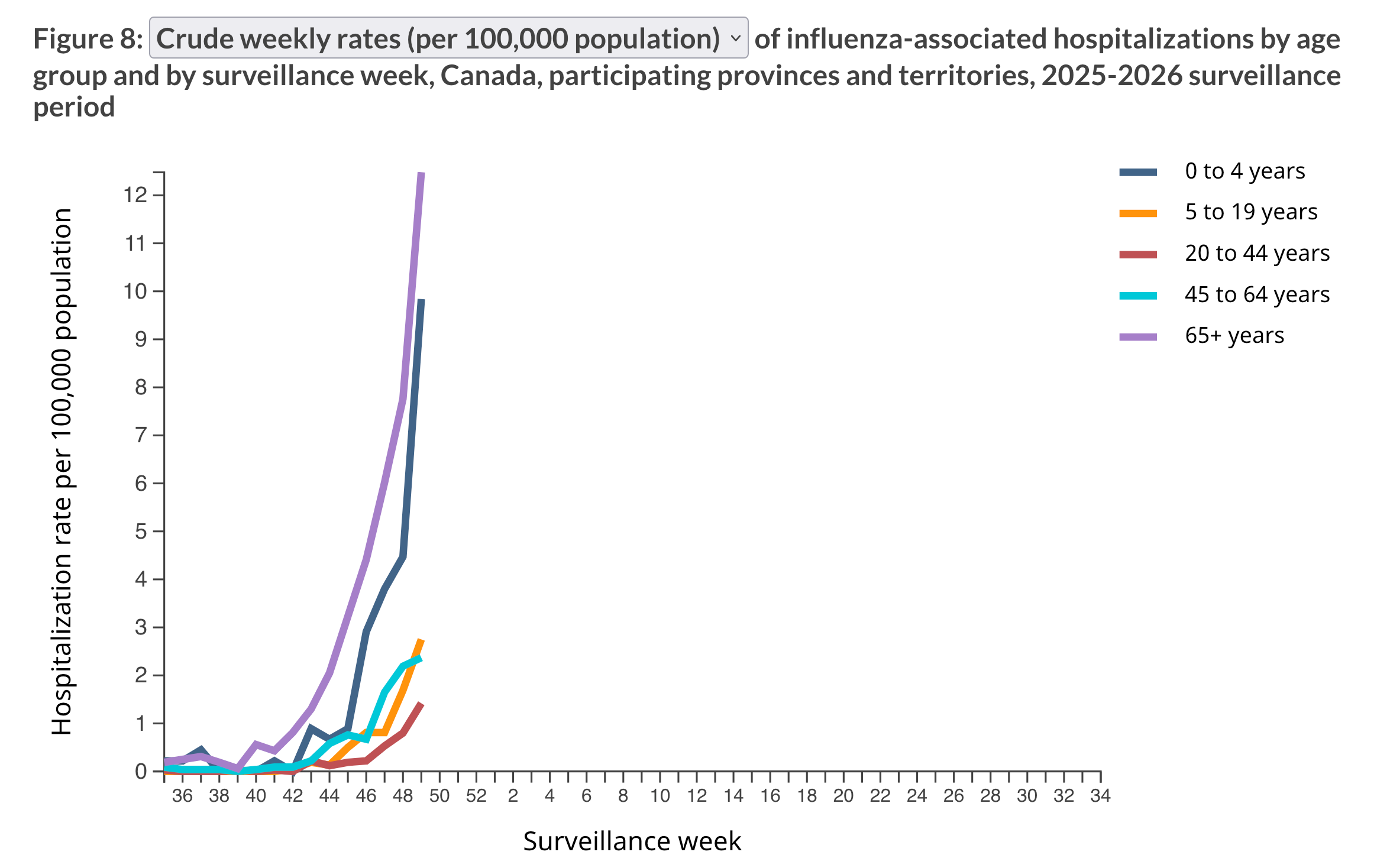
This is particularly true in Saskatchewan, where I live. Flu vaccine uptake in Saskatchewan has been dismal, with only about 20% of the province’s residents getting flu shots. Test positivity is spiking way up and hospitalizations are increasing. Saskatchewan is also suffering from a shortage of doctors, nurses, and other health care providers, so additional pressure on the health care system can lead to fractures in an already strained system. During the COVID pandemic, Saskatchewan’s health care system was so overwhelmed that patients had to be airlifted to Ontario to receive care. Right now, Ontario is grappling with the same surge in H3N2 that Saskatchewan is. And vaccine hesitancy in many parts of Canada, including Saskatchewan, is growing.
Vaccination is critical to protect Canadian health care. A mismatched H3N2 flu shot may not prevent you from getting infected, but it can still reduce disease severity. It keeps you out of the hospital, so you avoid requiring lifesaving critical care. The load on health care systems is reduced and you get less sick and recover more quickly. You are also less likely to transmit the virus to others, because vaccination also reduces shedding and shortens the time needed to clear the infection.
You should absolutely get a flu shot this season. It is not too late. They are free and available at most pharmacies and clinics in Canada. Even if you don’t care about the strain on the health care system, do it to spare yourself spending the holidays hospitalized with viral pneumonia being treated by an overburdened care team.
What about the situation in the US?
Last night, my comparatively wholesome Canadian evening news was interrupted by US President Donald Trump delivering one of the most bizarre presidential speeches I’ve ever seen in my life, which mostly consisted of him yelling a 20 minute-long Truth Social post at America in front of a garish display of holiday evergreens, concluded with enraged-sounding wishes for a Merry Christmas. Wow, did it not inspire confidence in how this flu season—or any significant public health issue—will be managed by this administration.
I’ve got a pretty bad feeling about how any flu seasons will be handled going forward in the US. Trump thankfully didn’t bring up vaccines like during his wild Tylenol-fueled rant in favor of monovalent vaccines this time. However, he railed against the “sinister, woke forces” of academia and spent most of his time on health screaming about his grand plans to shake down even more large pharmaceutical and insurance companies and scam the American people with his new prescription website. His omission wasn’t particularly comforting, since CDC is no longer a credible, functional agency.
Things in the US are pretty much like they are in Canada in terms of flu: H3N2 dominates, it’s all subclade K, hospitalizations are increasing, there have been deaths, and vaccine uptake is down because anti-vax political propaganda is way up. The biggest difference is that the US no longer has a truly functional federal health agency. More than a quarter of CDC employees have left the agency since Trump’s inauguration. Leaders with centuries of combined experience have been removed across the entire agency, and in many cases replaced with political appointees. Those appointees usually have two things in common:
They are anti-vax
They are egregiously unqualified
As a result, CDC’s ability to carry out core activities for managing flu season is hindered or completely impaired. That includes surveillance, response, and immunization. Kennedy is actively opposed to vaccination, so I don’t expect any “Bobby Says Get Your Flu Shot” campaigns to be forthcoming from HHS.
When I looked at CDC FluView, I noticed that clinical lab testing is down compared to last year. This is what you get if you show up at the doctor’s with influenza-like illness and they test to see if it’s flu or not. When you compare last year’s results with this year’s you see that there were fewer tests, but higher positivity, both this week and since September. That means there’s more flu around, but CDC is testing less.

The situation is similar when you look at data from public health labs. Not only is testing down and positivity up this year compared to last, there was also a big proportional increase in the amount of H3N2 being detected. That is once again being driven by H3N2 subclade K.
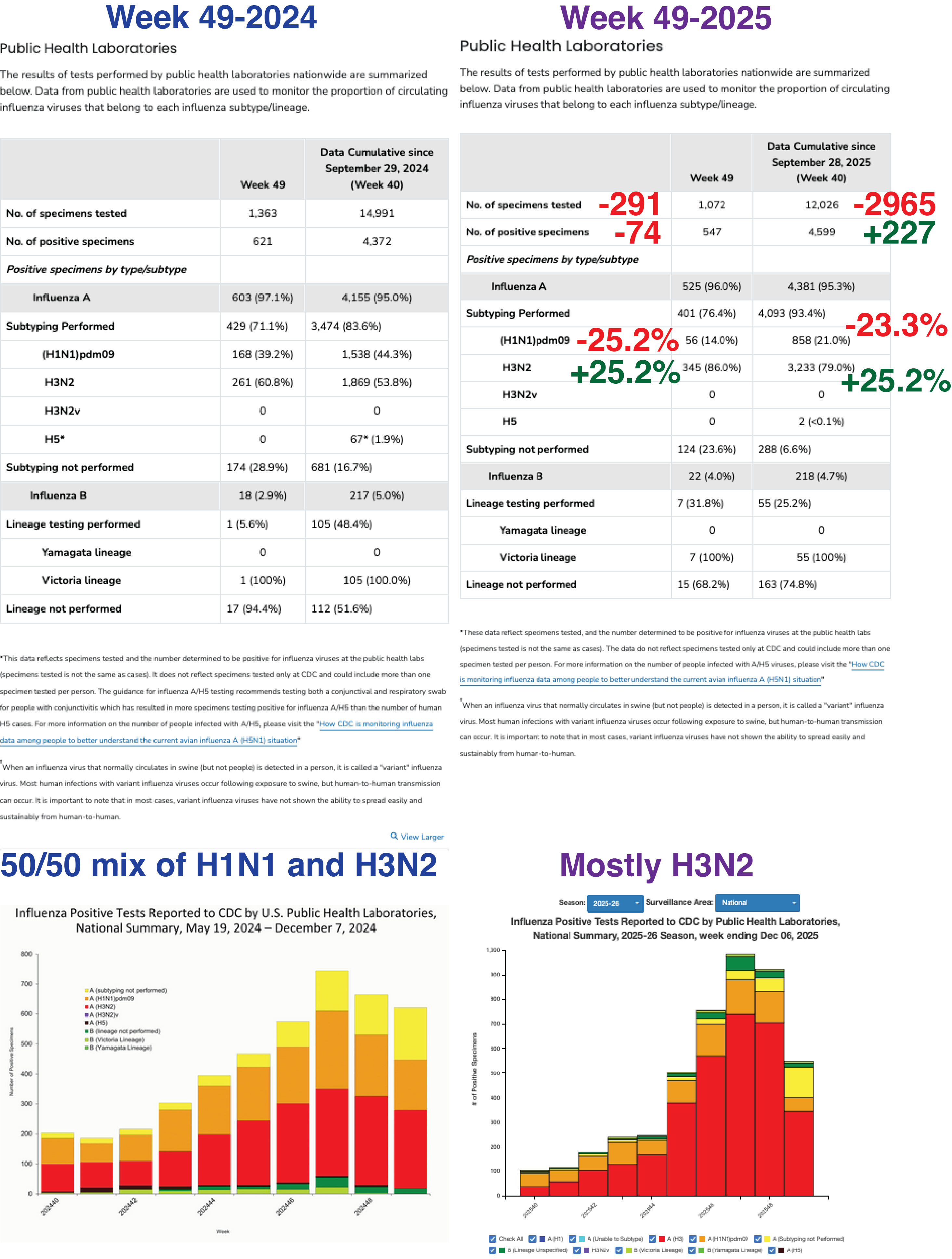
.The reduced testing seems like a problem, especially in the public health labs. These data are reported from tests either done by CDC or by state and local health departments, then reported to CDC. A primary function of CDC’s influenza surveillance is to compile data from all 50 states. The reduced testing could simply be that there is a lag in reporting, or a lag in getting reports into the system. Or it could be that there is less public health lab testing overall, probably because many state public health labs have lost federal funding. That cost jobs and capacity at the state level, which then is also compounded by the depleted CDC. The result is either incomplete or inaccurate data. I’m not sure which.
What does it look like for Americans when you go into a bad flu season with an anti-vaxxer at the helm of all American health and no functioning national public health agency? What does it look like when the American data is incomplete, unreliable, or no longer available to select flu strains for the vaccine every February? What if the US does something really detrimental, like drive out manufacturers or change the approval process for flu vaccines so that standards are impossible to meet? Will these policies affect other vaccines too, in the US, in Canada, and around the world?
We’re about to find out. I think it will be a bad flu season no matter what for everyone, thanks to the US incapacity to manage it. However, the US will be faced with some policy decisions that could make it—and all future flu seasons—far worse. It’s critical that we allow as few of those as possible to happen. Get your flu shot.

Thank you Doctor!!
Great post. I got my flu shot a couple days ago (better late than never!) but it's frightening how much misinformation I've seen on social media about the vaccine... especially in the biohacking/"optimization" space. If only we could rebrand vaccines as "immune system optimization"!