

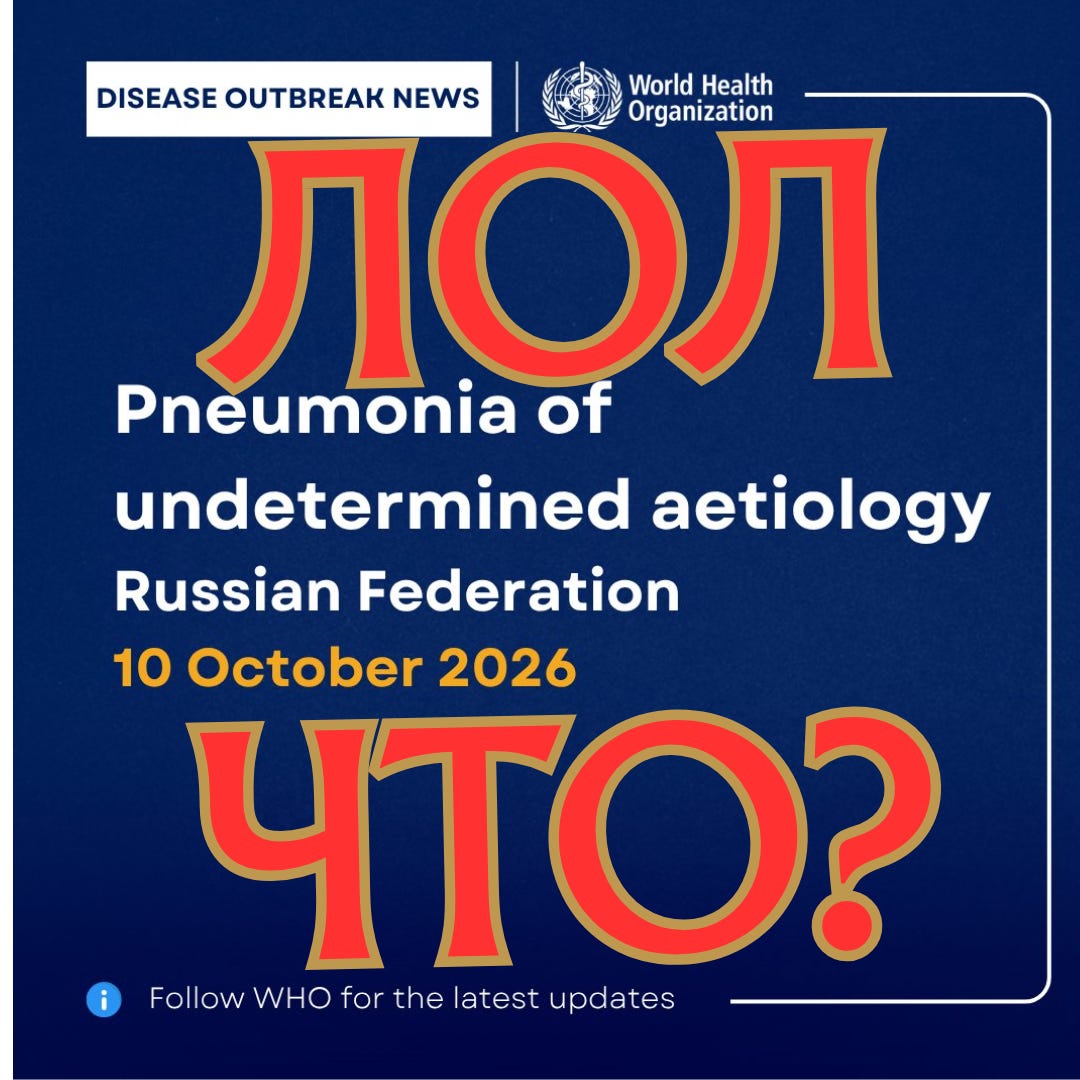
Good news! Russia has finally reported what happened with the possible pneumonic plague case in Irkutsk to the World Health Organization (WHO). WHO heard through the international media that there might be a death from pneumonic plague, and it might be a lab leak, and it might be a bioweapon. All are relevant to WHO’s mandate to address global disease threats and health emergencies in member states, so they requested verification from Russia.
WHO is now reporting that Russia officially verified that Darya Shipilova died of pneumonia of unknown etiology. That means they were unable to identify the organism that caused it, according to them. Here is what Russia told WHO:
Russia confirmed the death, but said there were no officially reported cases of plague in Irkutsk Oblast (the entire administrative region, like a state or province).
Russia stated that control measures (contact tracing and quarantine) had been implemented per standard protocols and that laboratory testing of contacts didn’t find anything save for incidental minor infections, like common colds and regular old non-plague bacterial infections.
Russia denied a biosafety failure or a lab-acquired infection (“no biosecurity incidents had occurred in the laboratory”), as well as any secondary cases.
Russia said Shipilova and all her contacts had gotten extensive diagnostic testing, including undefined high-threat pathogens. Test results were negative for high-threat pathogens.
Russia said all contacts were monitored in healthcare facilities or at home. None became symptomatic. Quarantine measures were instituted only in the hospital where Shipilova was treated and lasted a week.
WHO says they have not identified evidence of ongoing transmission associated with this event based on the information provided by Russia.
WHO explicitly mentions the absence of a confirmed diagnosis in the deceased laboratory worker, calling it a “key uncertainty.”
WHO will continue keeping an eye on things, as always.


However, Shipilova’s mother gave an interview to Russian outlet Glubina from quarantine at the hospital in Shelekhov where her daughter died. She emphatically denied that Darya had a lab accident and said that Shipilova was “ruined and abandoned” by Russian authorities.
So, in other words, we still have no idea what is going on. With this official report to WHO, it seems like the Russian Federation considers this matter closed. Based on historical track record for transparency about disease outbreaks, no further information will be forthcoming. Given that the past week has been plaguefest 2026, it’s hard to know what to think, because we don’t really know much about what happened. But we can unpack what little we do know, because the situation is concerning. It’s important to direct our energies toward addressing the concerns that we can actually identify.
What can we actually verify?
Not much! Unfortunately we can’t trust Russia’s word on anything here. They did not provide WHO with specifics. It sounds as though they aren’t being terribly forthcoming with information. Agénce France-Presse interviewed locals in Shelekhov about the situation on the ground, which seems predominantly plagued by rumors rather than actual plague bacteria. Medical worker Alexandra Iskalova said that her mother told her that ten deaths occurred (there is no evidence of this). She also read about some even wilder hypotheses about ursine zoonotic syphilis.
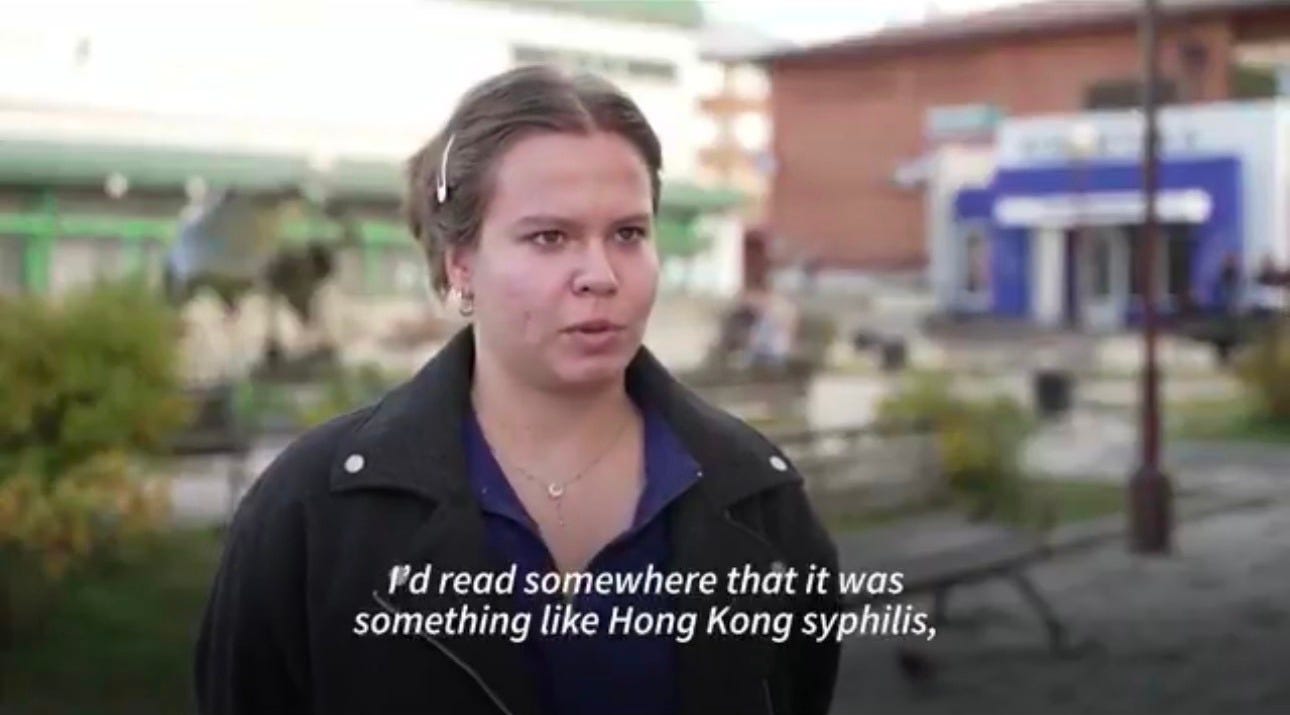
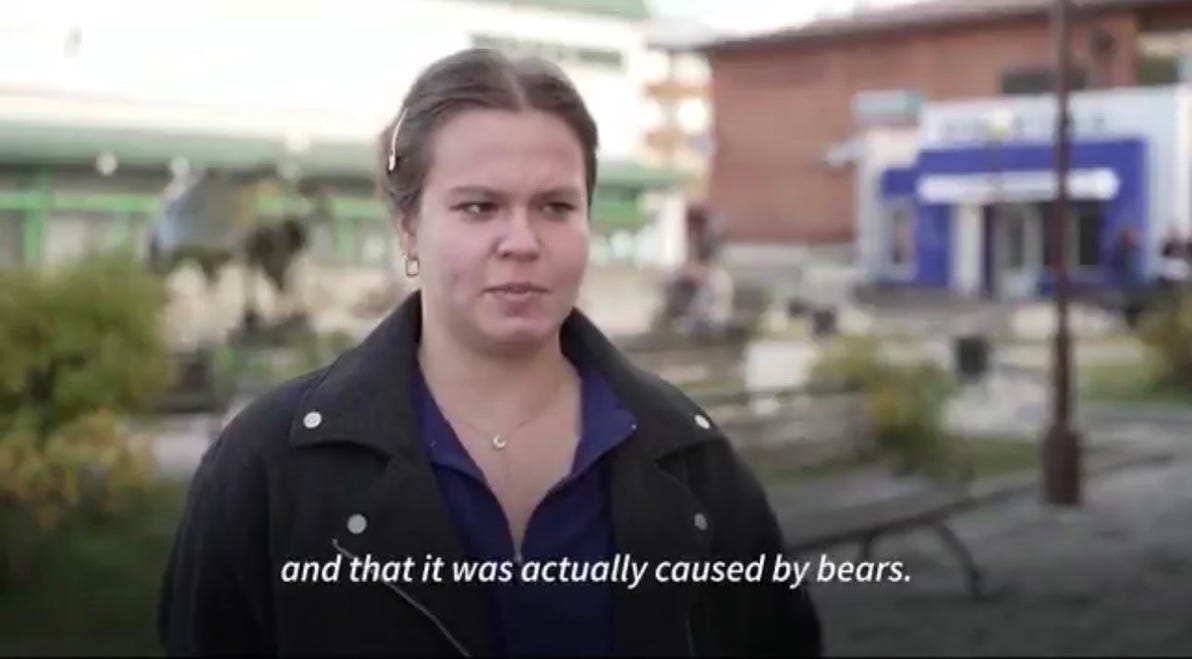
From the beginning, it’s been impossible to trust information coming from Russia. Even health care workers at ground zero—in the city where Shipilova went to the hospital that was quarantined—are not getting reliable information about the situation. But there are some things that stand out to me from the perspective of assessing biological risk.
Because I don’t trust AI translations to correctly interpret colloquial nuances, I also consulted my husband AK, who speaks fluent biology and Russian by virtue of spending the first three decades of his life in the Soviet Union and getting a PhD in biochemistry there. This revealed some things that are probably true in the context of Russian culture and what was verified in Russian language media, specifically the interview with Svetlana Shipilova. Here are some things that are probably true:
Shipilova died of pneumonia
Russian authorities, reporting from various sources, WHO, and Shipilova’s mother all agree that Shipilova died from rapidly progressing pneumonia. She went to the hospital in Shelekhov on September 29th. She died overnight between October 1st and 2nd. WHO reported learning about it from media reports on October 2nd. Moscow Times reported that she was suspected to have COVID and ventilated, which is consistent with pneumonia. Nobody’s account has varied about Shipilova’s death from symptoms that strongly resemble pneumonic plague: rapid onset of pneumonia, with death less than three days later.
Svetlana Shipilova works in healthcare, and she confirmed death from pneumonia in the context of her objections to her daughter’s medical team and the Russian government’s negligence and lack of transparency: “I've saved more than one such patient, but my daughter wasn't saved. They just let my daughter die.”
It remains unclear why Svetlana thinks the government could have done more to save Darya from pneumonia, but some of her anger is directed towards officials for not refuting disparaging reporting about her daughter’s professional competence. She very clearly suspects some type of government cover-up, but not due to a specific incident related to Darya’s work practices.
Shipilova was vaccinated against plague
Russia told WHO that Shipilova had been vaccinated against the agents she worked with, which is a standard biosafety measure for any type of work in which you could be exposed to a pathogen, especially one as deadly as plague. Svetlana Shipilova confirmed that Darya was vaccinated.
The vaccine licensed in Russia has been around for decades. It is a live-attenuated vaccine (made of weakened plague bacteria) that in some cases does not provide strong protection against pneumonic plague. Director Sergey Balakhonov of the Irkutsk Anti-Plague Research Institute primarily studies plague vaccines. The limitations of this vaccine are also well-known at this institute. They would not have relied solely on vaccination in the event of a high-risk exposure.
This doesn’t answer what Shipilova was infected with, but it may reveal what she thought about her own risk. By all accounts, Shipilova was a diligent, skilled technician who was respected by her colleagues. My guess is that she didn’t act as though she was at risk because she did not think she had pneumonic plague.
Shipilova was not infected while traveling or doing field work
Contrary to reports in the press that Shipilova had traveled outside Irkutsk Oblast (to Thailand or Buryatia, possibly to collect samples from wildlife for plague surveillance), Russian officials reported that she had not traveled in the two weeks before becoming ill. The governor of Buryatia also denied that she traveled there. Svetlana Shipilova also did not say anything about travel in the course of discussing her daughter’s job duties and the circumstances that led to her death. This would have been covered during the epidemiological investigation. Svetlana likely would have mentioned travel or field work when denying that Shipilova’s exposure occurred due to her work practices. After extensive searching—including sending AK on the hunt for articles mentioning marmots or tarbagans—there is no verifiable evidence that Shipilova handled rodents or other wildlife for work or had recently traveled anywhere besides her workplace in Irkutsk. She was not infected with the pathogen that killed her anywhere outside of the region.
Shipilova did not break a test tube
Shipilova’s mother was vehement that her daughter did not break a test tube, resorting to somewhat hyperbolic and inaccurate descriptions about the imperviousness of tubes used in high containment labs. Tubes can and do break, even though they are not made of glass. When plastic tubes are frozen at -80° C (the standard temperature of lab freezers used to store virus stocks), they can become brittle, especially polystyrene tubes. This is why I avoid using 5 mL Falcon tubes and 15 mL conicals for larger volumes of virus: they are the most likely to fracture or leak after coming out of the freezer. Also, human beings are imperfect and can spill a tube’s contents, no matter how fastidious and careful they are.
What is critical is an appropriate response, which means reporting possible exposures. According to Svetlana, Darya was highly competent and well-regarded by her supervisor. Her competence was verified by classmates and colleagues, as well. Based on my own experience working in high containment in two countries, you can’t just walk in off the street and start cultivating pathogens. You have to go through extensive security checks as well as be demonstrably competent in the lab. Alexander Chepurnov, chief researcher at the federal Institute of Virology, confirmed that all of these are standard practices for containment laboratories in Russia. I can understand Svetlana’s anger that Darya was implicated as professionally inept or reckless based on unverifiable reports.
From a biosafety perspective, the broken test tube story confused me. A broken test tube in a modern containment lab is not a sharps hazard as a broken glass test tube would be. It is an inhalation hazard. That is why whenever you work with a pathogen that can be transmitted by this route, you handle it in a biosafety cabinet and you wear a respirator. The Irkutsk Anti-Plague Research Institute has been around for almost a century and is home to some of the world’s most knowledgeable experts on plague. If anyone knows how to avoid getting plague, it’s people who work at this institute. Shipilova would be unlikely to ever handle infectious Yersinia pestis outside of a biosafety cabinet or without a respirator.
Shipilova did not have a lab exposure that she knew about
I believe Svetlana Shipilova’s account of her daughter’s life, especially the part about how hard she worked to earn her position at a prestigious research institute. I was once like Darya Shipilova. I worked as a lab technician at an immunotherapy startup for three years before graduate school and I was accepted into my PhD program at Columbia University in part on the strength of that work (Bonyhadi et al, J Immunol, 2005, third author, baby!). As someone who has spent most of my professional career handling pathogens in the course of studying them, I know what my highest priority is in the containment lab: safety.
That is why I always report any irregularity, no matter how minor. I have never had a high-risk exposure in a virology lab, much less gotten a lab-acquired infection or caused a containment breach. If I ever did, I would report it as regulations demand. I would not want to put my colleagues, family, or community at risk. I would not want to get an infection that could kill me. That is why lab workers are trained and incentivized to report exposures immediately, in addition to being required to do so. If I had an exposure, I would report before leaving containment, so I could be immediately isolated without creating additional exposure risks to anyone else.
That triggers a medical evaluation and a pre-existing process designed to safely isolate me and provide me with life-saving treatment. Depending on the pathogen, a high-risk exposure can still be mitigated in terms of mortality. If I had a massive respiratory exposure to MERS-CoV, then bad news. No vaccine, no approved treatment, and over 30% mortality. My doctors could try Paxlovid or remdesivir or maybe some experimental monoclonals and also prayer. That’s why there are multiple redundancies to prevent exposure.
On the other hand, if I were exposed to clade I mpox virus (up to 10% mortality), I’ve already been vaccinated. I probably wouldn’t even get infected at all unless exposed to a very high dose, but if I did, I could take tecovirimat (T-POXX). Although sometimes people are hesitant to report for various reasons, one reason that people usually do is that reporting a lab exposure will save your own life.
Shipilova would have had very strong incentive to report a lab exposure. She would have known that the vaccine might not be completely protective against pneumonic plague. Taking prophylactic doxycycline can prevent disease onset altogether. The Russian government and Svetlana Shipilova both denied any type of lab exposure, reported or not. If she knew she had been exposed to plague, she would have sought doxycycline in either situation. She probably would also tell her mother about it.
Doxycycline is a generic, commonly-used antibiotic. AK confirmed that, although Russia has tightened up drug regulation, some things have not changed from Soviet times. It is trivial to get drugs like doxycycline, that require a prescription but are not controlled substances, from most local pharmacists by asking for it or—if that doesn’t work—petty bribery. Even if Shipilova had concealed a lab exposure, she likely would have taken post-exposure doxycycline if she knew she had been exposed, unless she was reckless or stupid enough to roll the dice with pneumonic plague. If she had been exposed to something else—AI gain-of-function Soviet Ebolapox—she might not have tried to treat plague but she likely would have done something if she knew about it.
She didn’t. Shipilova wasn’t aware she had been exposed to plague or any other pathogen.
If it was related to her work in the lab, it happened without her being aware of it. That in itself is a very serious issue regarding the institute’s practices, whether accidental (catastrophic containment breach) or malicious (deliberately infecting someone with a pathogen is using it as a bioweapon).
Control measures were standard for pneumonic plague
Although there have been varying reports about multiple hospitals being locked down, the only account verified by multiple sources is the hospital in Shelekhov where Shipilova was sent for treatment and where her mother was quarantined. Russian officials reported that people in Shelekhov were quarantined in the district hospital and released after a week. People may have been kept in other hospitals or medical facilities, although that’s less clear.
This is consistent with multiple media reports that Anna Popova, Russia’s chief public health official, flew from Moscow on October 2nd to convene an emergency meeting about it. At that point, reports of quarantines were already spreading. On October 8, Irkutsk Oblast governor Igor Kobzev announced quarantine ended six days after the emergency meeting, according to existing Russian public health policies and internationally accepted recommendations. Contact tracing and quarantine and isolation are standard epidemiological methods for containing outbreaks. All of this suggests that at some point, some Russian authorities thought they were dealing with plague. There is not enough evidence to assess whether they thought they were dealing with something worse or that they are covering anything up.
There is no plague outbreak occurring in Irkutsk
I’ve seen a lot of unverified pictures floating around online that show trucks carting bodies around or people who are purportedly FSB officials overseeing the coverup of an expanding outbreak. Russian officials have flatly denied any other cases and the WHO report flatly states that Russia reported no registered case of plague and no other cases of pneumonia were found among Shipilova’s contacts, who were monitored for a week. They found a couple of COVID cases, common colds, and opportunistic infections, but reported nothing out of the ordinary or particularly alarming.
In reality, there are no verifiable reports of any other pneumonia cases at all and no credible evidence. Interviews with locals on the ground suggest that there is a lot of speculation and few facts. If ten people had died, this would be known. After a single death, everyone in Irkutsk and Shelekhov seemed to know about it. If the FSB were loading bodies into dump trucks, somebody would notice and talk about it.
Russian propagandists are not good at disguising outbreaks. They are good at obfuscating the truth so that nothing is very believable. That only works when people aren’t dying mysteriously in increasing numbers. In 1979, it didn’t take very long for people downwind of the illegal bioweapons factory in Sverdlovsk to notice that a lot of people were dying from pulmonary anthrax, even though it took more than a decade to verify. Even fifty years ago in the Soviet Union, people almost immediately registed deep suspicions about the official “contaminated meat” story, even if they were unverified.
Sverdlovsk has repercussions to this day. The US most recently issued sanctions against the former institute in Sverdlovsk (now Yekaterinburg) implicated in illegal bioweapons development in 2021 in response to Alexey Navalny’s attempted murder, even though that was a chemical nerve agent. The world has been watching Russia for the last half century and it is not a secret that they continue to get up to some of their old tricks.
More recently, in April 2026, the Russian authorities claimed that widespread cattle illness and death throughout western Siberia were caused by pasteurellosis. Pasteurellosis is an opportunistic bacterial infection that can be treated with antibiotics and does not require culling for control. Pasteurellosis is also not notifiable to the World Organization for Animal Health (WOAH), but foot and mouth disease virus (FMDV) is. FMDV is incredibly contagious and it presents a significant threat to animal health and agricultural production. Vaccines exist but need improvement, so infected herds have to be culled to remain in compliance with trade agreements that require adherence to WOAH protocols. Western Siberia had recently been certified to be FMDV-free by WOAH, which opens new export markets for Siberian cattle products. Although the US Department of Agriculture (USDA) reported that local sources identified this as an unreported FMDV outbreak.
Outbreaks that kill people or have profound economic impacts simply can’t be covered up. People know other people, who usually notice when someone dies unexpectedly. People also notice when they lose their jobs or can’t feed themselves. If you can’t stop people from noticing, you can at least make the facts impossible to verify.
This technique is being used very effectively to obscure the effects of health policies implemented by Trump in the US. The impact of discouraging vaccination alone, as Trump has repeatedly done, is quantifiable. The evidence is quite clear that the cost of Trump’s Putin-style approach to public health and outbreak response will be measured in American lives.
Let’s hypothesize!
Professional fearmongers like Annie Jacobsen know that the best way to get people worked up about this is to complain that WHO isn’t mobilizing its tactical teams and knocking down the door of the Irkutsk Anti-Plague Research Institute. The many thought leaders of the lab leak universe have prolifically complained about WHO failing to do the same thing at the Wuhan Institute of Virology regarding the COVID-19 pandemic.
WHO is funded and exists to serve its member states in its mission to protect global health. They do not have enforcement authority. WHO cannot show up in Irkutsk with a warrant and demand a look at the freezer inventories. They are not the World Health Police. It is Russia’s duty to report and they have consistently failed to do so. This does not necessarily indicate that Russia is violating the Biological Weapons Convention (BWC). The fact that WHO learned about the outbreak from media reports does indicate that Russia is not transparently reporting disease outbreaks as they agreed.
Russia has undoubtedly collected enough metagenomic sequence data from Shipilova’s samples to assess what she might have been infected with, but WHO cannot force them to share this information. All they can do is continue asking for it. Russia can continue to ignore the requests.
Still, Darya Shipilova did not die of spontaneous pneumonia. She was infected with something. Because of the risk that it could be something really bad, it is still worth pursuing what it was. So as a scientist, here are the hypotheses I think are still on the table based on the evidence. It’s not possible to quantify risk, so I’ve added my own qualitative likelihood forecast measured in vibes.
Hypothesis 1: Routine pneumonia exacerbated by medical negligence
Shipilova had garden-variety pneumonia caused by a routine respiratory pathogen other than SARS-CoV-2. Despite not having COVID-19, she was reportedly treated for COVID-19. Treating COVID-19 instead of diagnosing the actual cause may have worsened her condition and caused a treatable condition to become lethal. At some point, health officials began treating it like plague, resulting in public alarm. Neither diagnosis was correct. Shipilova’s workplace is a coincidence.
Evidence for: Direct. Shipilova’s mother describes her pneumonia as similar to other patients she treated in the context of her dissatisfaction with her medical care. Circumstantial. Pneumonia of unknown etiology is a common cause of death, so it’s not unusual for it to occur.
Evidence against: Circumstantial. Shipilova was 28 years old and healthy, not at high risk for dying from a rapidly progressing lethal pneumonia.
Evidence needed: Documentary. More information about Shipilova’s course of medical treatment. Scientific. Results from the diagnostic testing and the metagenomic sequencing that has undoubtedly been done. If Shipilova had bacterial pneumonia, there should be plenty of sequence reads showing which bacteria were present using basic metagenomic 16S sequencing. There are lots of nanopore-based and PCR-based ways of screening for different pathogens and Russia certainly has these capabilities. Unbiased high-throughput sequencing at sufficient read depth would reveal any viruses and anything unusual or exotic, like fungi or single-celled organisms, too.
Cover-up motive: Conceal both medical negligence and implementation of plague measures that sparked public panic.
Likelihood vibes: This seems unlikely because Russian officials are so prone to dishonesty, but this could actually explain the entire situation and there isn’t a lot of information that makes it less likely. The main issue is why Russia is not sharing metagenomic sequencing data it surely has acquired that could at least point toward a possible cause. That is unknown, but it doesn’t support Russian honesty.
Hypothesis 2: Lab leak due to biosafety failures
Shipilova may not have known about an exposure in the workplace, but it is still possible one could have occurred. Exposure to a deadly pathogen in a lab that isn’t caused by human error or equipment failure that goes undetected suggests major systemic biosafety problems. If facility leadership does not follow or enforce regulations, if there is insufficient oversight or training, or if there are inadequate resources to maintain proper biocontainment practices, then that lab should not operate. It does not matter whether that pathogen leaks in the course of any type of dual use research. Any lab with biosafety or biosecurity practices, safeguards, and facilities so inadequate that they result in an undetected lethal lab-acquired infection and containment breach should be shut down immediately.
Evidence for: Circumstantial. Shipilova was a healthy 28-year-old and is at a relatively low risk of death from a routine respiratory infection. Her disease course and description is consistent with pneumonic plague. She worked as a lab technician who handled infectious plague bacteria. Historical. This is not unprecedented. According to former Soviet bioweapons program official Ken Alibek, the 1979 Sverdlovsk outbreak was caused by a similar failure when a filter was left off an exhaust vent in a bioweapons manufacturing facility that was lyophilizing anthrax spores for aerosol delivery at industrial scale. Alibek also is one of several sources reporting that the Soviets attempted to weaponize plague.
Evidence against: Incomplete. Biosafety protocols at Shipilova’s workplace sound adequate but there is no evidence of regulatory oversight, enforcement, or actual practice.
Evidence needed: Documentary. More records about how a lab leak was ruled out, including any investigation that was conducted, governance and oversight, reporting, training, inspections, and Shipilova’s professional job duties. Scientific. Records about what pathogens Shipilova handled and diagnostic test results for the “high-threat pathogens” Russia claims to have run. Genomic sequencing should be aligned to reference genomes from those pathogens specifically.
Cover-up motive: Conceal major biosafety failures caused by institutional or government negligence or ineptitude. In the current climate, there is a lot of attention focused on high containment labs globally. Pathogen research has become a political issue and the topic itself has been weaponized to disrupt democratic processes in other countries by Russian propaganda campaigns, including in the US and Ukraine.
Likelihood vibes: If Shipilova’s infection was plague, then checking the sequencing data should show a match with strains of plague at the institute and it would be a slam dunk lab leak. This is also a very strong incentive to cover up even an individual case of plague. This is as likely as hypothesis 1.
Hypothesis 3: Lab leak of modified pathogen
If Shipilova was infected at work with a pathogen that had been modified to be more dangerous to people or animals, then a serious containment breach has occurred that presents a grave risk to public health. If the pathogen was modified as part of an illegal bioweapons program, then that would at minimum violate the BWC. It would have profound effects on foreign relations, especially in relation to Russia’s efforts to conquer Ukraine. Maybe it was modified plague that isn’t detectable by standard PCR diagnostic tests or maybe it was another modified pathogen and the plague response was a cover story.
Evidence for: Incomplete. This is impossible to assess without more information about activities at the lab or unpublished pathogen modification work. I did not find evidence in the literature that they were doing gain-of-function research, although my search ability is limited because of gaps in Russian language publications indexed in PubMed. Also if people are engaged in state-sponsored illegal bioweapons research, they usually don’t submit their findings to academic journals for peer review. Circumstantial. Authorities rushed to put Shipilova’s contacts in lockdown, suggesting maybe this was worse or less treatable than unmodified plague. Historical. The illegal Soviet bioweapons program modified plague by adding antibiotic resistance genes to it. They also reportedly were planning all sorts of inventive ways to juice it up more, and maintained a long wish list of pathogens they were developing or had tested. Maybe that actually happened.
Evidence against: Circumstantial. The Soviets went to great lengths to conceal their bioweapons program, since it violated the BWC. That seems inconsistent with rushing to quarantine people for plague and then saying it wasn’t plague after all. If you use plague from a Cold War-era plague institute in Siberia as a cover story for containing something else, that something else must be pretty bad! Scientific. The quarantine protocol implemented is the standard public health approach for containing natural pneumonic plague outbreaks. It is implemented any time plague is suspected. Shipilova’s job and symptoms both increase her risk for plague, so it is not outrageous to implement plague control measures. Suspicion of plague is not the same thing as suspicion of modified plague. There is no indication the response was beyond what is typical to contain a plague outbreak.
Evidence needed: Scientific. We don’t know what pathogen Shipilova was infected with, so we can’t tell if it was modified. Even if the pathogen is identified, we can only determine if it is different from known reference genomes based on genomic sequence data. You can’t always tell dispositively if something has been modified by engineering or nature (ask me how I know).
Cover-up motive: Conceal the release of a modified pathogen with potentially disastrous impacts. Antibiotic-resistant plague could create massive environmental problems for susceptible wildlife, food security, and economic losses, as well as untreatable plague epidemics across a large region extending to Mongolia and China. If the modified pathogen is evidence that Soviet-style illegal bioweaponeering continues under Vladimir Putin, concealing that from the international community would have grave consequences. If related to Russia’s ongoing attacks on Ukraine, it is an act of war.
Likelihood vibes: Less likely than 1 and 2, but still very possible. We know Russia was weaponizing plague. They are almost certainly currently modifying it, just as all researchers do. That is how we learn how pathogens work and how to counter them. It’s possible that modified plague could have leaked from this research institute, because they do modify plague. But based on the epidemiologic evidence, it did not spread. We don’t even know what pathogen it was. We can only say that Irkutsk is a more likely place for this to occur because plague research occurs there.
Hypothesis 4: Some kind of unusual naturally acquired infection
Just because horses are more likely than zebras doesn’t mean zebras should be excluded. It is possible that Shipilova was naturally infected with something other than a routine respiratory pathogen. By some unlucky coincidence, Shipilova was exposed to an unusual or novel emerging pathogen. People have contact with animals more than they realize. Shipilova could have been exposed without realizing it. The shoppers at the Huanan Seafood Market probably didn’t know their trip to buy produce or eyeglasses or fish would result in a devastating pandemic, either. While Shipilova’s exposure thankfully did not result in onward spread, she could have been infected with a natural pathogen that is very lethal and not very transmissible. This makes it even more imperative to determine what caused her pneumonia.
Evidence for: Incomplete. Shipilova had no reported risk factors for exposure to zoonotic threat agents besides her occupation. That doesn’t exclude a potential exposure.
Evidence against: Incomplete. Shipilova did not travel and there are no verified reports that she worked with wild animals or in situations that would increase risk of natural exposure.
Evidence needed: Documentary. Data from the Russian health officials’ investigation of Shipilova’s epidemiological history and contacts could demonstrate evidence of previously unrecognized exposure risk. Scientific. WHAT PATHOGEN IS IT??? Russian officials should share their sequence data.
Cover-up motive: Conceal a natural outbreak of a novel pathogen. I have been a contestant in the scientific debate about the origins of the COVID-19 pandemic since 2020 and witnessed firsthand how far people will go to deny evidence showing that this came from the wildlife trade rather than being cooked up in a Fauci-funded Chinese virology lab and covered up by my friends and colleagues. No country wants a generational pandemic to emerge from within their borders.
Likelihood vibes: Unlikely. If Shipilova was naturally infected with some novel strain of plague or some other exotic, unspecified pathogen, she was remarkably unlucky to the point of statistical anomaly.
Hypothesis 5: Bioweapon attack
Bioweapons are not always intended to cause pandemics or take out armies. If you use a pathogen to inflict intentional injury on a person, you are weaponizing it. Putting a person in a situation where they will be exposed to a pathogen that could kill them is an illegal bioweapon attack as well as attempted murder. Shipilova could have been intentionally and maliciously infected through unknown means for unknown reasons by unknown perpetrators with an unknown weaponized pathogen. If this happened, she was murdered by a bioterrorist. Historically, Russia has targeted enemies and dissidents in assassination attempts using chemical weapons such as Novichok. Maybe they are doing it with pneumonic plague or some other bespoke pathogen.
Evidence for: None. We have no evidence of this at all.
Evidence against: None. We also can’t rule it out.
Evidence needed: Any. There is no evidence at all that Shipilova was the target of a bioweapon murder plot of any kind or that any such plot ever existed.
Cover-up motive: Conceal murder by bioterrorism. Pretty obvious why a bioterrorist murderer might not want that getting out.
Likelihood vibes: Extremely unlikely. Worst-case scenarios used to strengthen preparedness are not proof that something happened in real life.
So what do we make of this?
At the end of the day, the world depends on Russia’s repeatedly broken promises to comply with agreements they have made and share all of the information they are not sharing. Definitive answers are unlikely to be forthcoming. Infectious disease outbreak resolutions are not episodes of CSI. There is no magical molecular diagnostic machine that you just stick a tube into and returns a result that settles things once and for all. That is the fantasy that Elizabeth Holmes based the Theranos scam on, not the scientific and technical reality that constrains even the wildest imaginations. Outbreaks of emerging pathogens are messy even in the most well-studied cases. They rarely result in satisfying explanations.
What I hope people take from this is that even in the messiest of circumstances, you can still glean important information. There isn’t going to be an epidemic of whatever killed Shipilova, but that isn’t what we should be worried about. We should be deeply worried that all of our mechanisms for addressing biological risk as a global community—from nature, negligence, terrorists, or adversarial states—fail to accurately quantify it and are thus inadequate for addressing it.
The US is increasingly following Russia’s lead in terms of transparency and now makes health and emergency response decisions based on political agendas over evidence. Trump continues to fawn over Russia, going so far as to thank Putin for the opportunity to betray Ukraine and our allies by buying fuel from him in spite of sanctions.


American servitude to adversarial foreign interests is what we should be worried about, not a maybe-plague outbreak that never happened.
PBSNEWSHOUR had Annie Jacobsen on as an expert guest to discuss this death, with a copy of her book about plague behind her. When asked whether this death, a possible lab accident could become a pandemic, she said, "Well, we know lab leaks can cause pandemics. We've already seen one." Of course, none of the PBS team knew enough to challenge that. Obviously, they should have you on their list of experts, along with Paul Offit for questions about infectious diseases rather than the author of books about Area 51.
Fantastic analysis and explanation. Very much worth the read and appreciation. RFK, Jr. likely has reviewed this and concluded that cocaine is needed with a jigger of sewage water. The larger problem continues to be the Rapepublicans’ efforts to turn the government into a slipshod less-competent weak imitation of Russia with some sprinkling of North Korea.